What steered the whimsy of autumn winds? What spurred tree limbs To shed their splendor? What lies in store for leaves That can flee the nest no more?
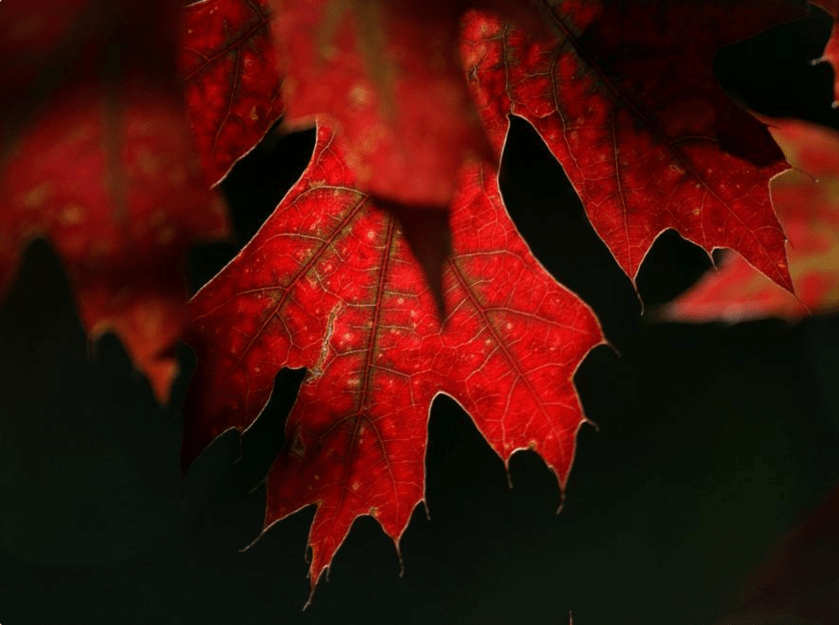
Yes–these scarlet leaves, Which bow and twirl In a final, delicate waltz, Which tremble and falter In fruitless preparation For a fall that won’t ever come.
I don’t know what is it to birth a child, But I know how to press my ear to the earth, To curl my fingers in supplication, To stare at a blank page until they are clear– The mysterious whispers of a hundred lives, And I–the midwife who’ll deliver them into the world.
Does the tree trunk rot and crumble After its leaves wither to dust? When Spring comes once more, Will you lift your face to the sky And still taste the rain?
By this time tomorrow, The secrets of my fickle heart Will be laid bare Before a room of strangers;
They will scrutinize and analyze Each and every outpouring From my most vulnerable core;
They’ll compare it to my compeers– As if I don’t overdo that already– Before they declare it:
Fit or failing
You would think that of all the tests– Countless labs, a spinal tap, biopsy, MRIs, autonomic test, 48-hr EEG–
That this: Two catheters inserted into me Via pulmonary and radial arteries, To ride an exercise bike, Muzzled by a mouthpiece, Into increasing resistance Until I hit that metaphorical wall Or the literal floor…
Would jangle these raw, damaged nerves And skyrocket that thumping, racing Beat-beat-beat-beat, Churning hypertonic muscles like a raging cyclone, And, with the reliability of a Casio G-Shock, Put a screeching halt to my zzz’s––
But instead, I am finding that Curiosity draws me forward More than fear and catastrophizing pulls me back;
The promise of long concealed mysteries Finally fully uncovered and revealed Leaves my veins thrumming with anticipation
How do I sit with this knowing of not-knowing, Or attempt to commune with the great-grandfather of my great, grandfather When I cannot speak the words of his mother tongue?
What can I hear in this restless silence, left Long after my grandma still had breath To fill in all those gaps in my memory?
Why did I not record more than the highlight reels of my ancestors, Nor seek out the hidden tracks of their unfulfilled desires, Nor ever get to feel those cracked sharecropper’s hands graze my cheeks?
Where shall I carry this ponderous and precious cargo Of inexpressible grief, regret and sorrow For all that has been lost and left behind?
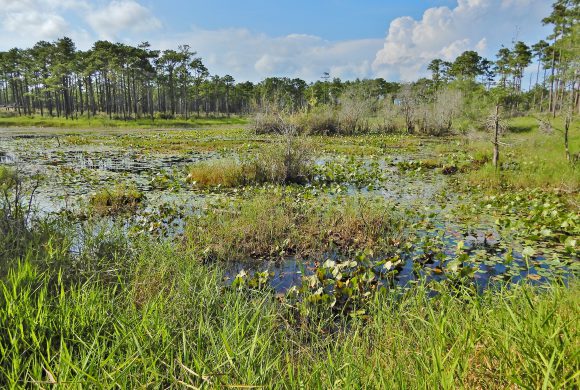
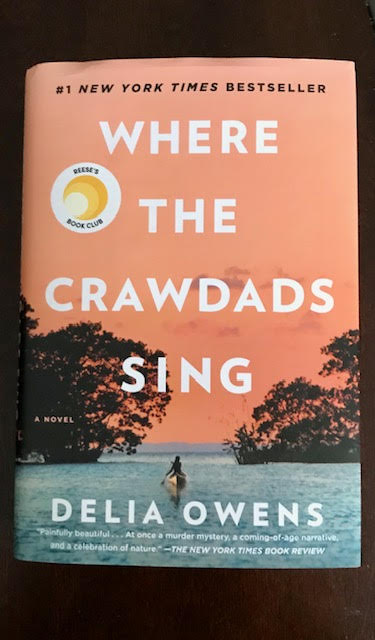
The hidden splendor of coastal North Carolina is the true starring character of Delia Owen’s first novel, Where the Crawdads Sing. With a naturalist’s eye, Owens uses the poetry of fiction to capture the mysterious beauty of the marsh in exquisite detail. The freshwater wetland comes to life through the eyes of its main co-star Kya, who is forced to fend for herself in its vibrant wilderness as a child.
Wholly abandoned by her family, Kya learns to scrabble her way to surviving–and, ultimately, thriving–in the untamed environment. While her knowledge and love of the flora and fauna that surrounds her expands meteorically as she matures into young womanhood, the enigmatic beauty is a much slower study of human nature. When it comes to coexisting with other humans, Kya treads in unfamiliar waters. Generally, she is hesitant to grant others her trust, though, when it comes to romance, her pace proves uneven. When she is not actively front crawling away from human affection, she finds herself nearly drowning in heartbreak, aching solitude, and even physical danger.
The novel opens with riveting and infectious prose, but it eventually meanders and crawls to a sluggish and plodding pace. This is largely due to the fact that this novel suffers from an identity problem: It wants to simultaneously be a romance novel, murder mystery, family drama and definitive work of nature writing. To me, it only truly shines at the latter.
The physical danger Kya gets wrapped up in is what ultimately produced what I felt was the least intriguing aspect of the novel. The murder mystery plot is anemic at best, and all the secondary players read like worn clichés. At its worst, the nature-filled metaphors for entrapment feel far too heavy-handed. Stubbornness more than infectious curiosity that kept me from stopping the novel midway.
While Tate’s abiding love and devotion to Kya and her livelihood were endearing, I found myself not really caring if the two would survive beyond a childhood romance. Perhaps the ‘educated man-as-savior’ trope rubbed me the wrong way. Or it was the way he got a pass, of sorts, after so abruptly and completely disappearing from his love’s life in the first place. I felt that Tate didn’t give a thorough explanation to Kya, and thus, the author didn’t give a real one to the reader either.
Similarly, I felt Kya was almost too forgiving of the family that left her alone to deal with a drunk, abusive father. While I empathized with the internal struggles of certain members of her family, there is no real satisfying explanation as to why no one could bother to take Kya with them when they left. It is no wonder that she has such crippling trust issues or why her first instinct is to run.
Despite these issues, Owen’s mastery of descriptive narration earned by authentic respect and admiration, and I look forward to finally reading her nonfiction nature writing. I felt her novel truly shined in its expert exploration and tender tribute to the majesty of nature, evoking a renewed sense of awe and wonder in me for wildlife. Reading this lit a spark in me to learn more of the world that exists outside the dictated confines of these suburban walls. I am eager to stoke the fire from a casually interested passerby to a fully immersed and knowledgeable observer of nature’s treasured sights and sounds.
Ten years a slave– To tangled limbs And a torquing spine, To a broken medical system And neural network gone offline
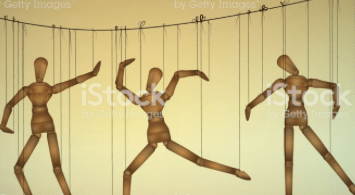
Ten years an observer– Of the quirky, jerky movement of a marionette Compensatorily adopted two decades ago After a bike/car accident left my Body and brain bruised and bowed
Src: istockphoto.com/portfolio/fona2
Ten years a student– Of physiology and the human mind; Acquiring an armchair PhD In neuroscience, while redefining My own healing potentiality
Ten years a master– Of my own holistic healing, not settling for damning Medical ‘experts’, neurotoxins, or surgery of the noggin’, Striving instead for true reprieve with therapeutic nutrition, Restorative movement and mindful intention
Ten years a warrior– Gutting it out in the trenches, battling for control Over my splintered body, mind and soul Wrestling all threats against my spirit with Weapons of mass reconstruction and resilience
Ten years of struggle and triumph behind me A lifetime of hard work and hope ahead, Bitter conflict yields to the fickle dance of peace: Realizing dystonia isn’t really my biggest adversary, but rather My greatest teacher for embracing my body as ‘beloved friend’
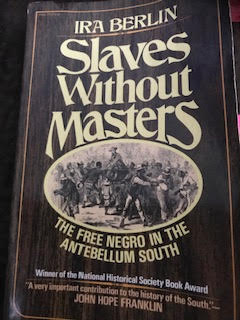
The early history of people of color in the United Stated has focused almost exclusively on their enslavement, which has incompletely presented and positioned the identities of, ideologies about, and policies toward blacks in this country up through the modern age. In actuality, there were approximately a quarter of a million free African Americans living in the Antebellum South. In Slaves Without Masters: The Free Negro in the Antebellum South, author Ira Berlin extensively documents the oft-untold (and frequently concealed) experiences of free people of color between the Revolutionary and Civil wars.
After the U.S. War of Independence, there was an initial wave of slave emancipation that freed thousands of African Americans in the South. Slaves Without Masters casts its focus on this diverse population of free blacks during the antebellum era. Their lives varied drastically based on geography (border states vs. upper South vs lower South, rural vs. urban); the constantly changing laws and racial codes of the day; the perceived value of their occupational skill set and level of education; their alliances––or lack of positive relationships––with other FPOC and with other whites; and, markedly, the specific hue of their skin.
Despite the uncertainty and instability of life leading up to and through the Civil War, some emancipated people of color were able to acquire formal education, start their own businesses, buy homes, own landed properties and form influential community organizations. Others, however, lived in shanty dwellings or were forced to roam from town to town and state to state as white Southerners debated what should be done to control the expanding presence and power of free blacks in their communities. Many–if not most–free people of color were continually in fear of falling afoul of constantly changing ‘black codes’, and they were regularly threatened with unwarranted imprisonment, unexpected violence, and serious threats of expatriation or enslavement.
Berlin paints a vivid portrait of the historical events and socio-political influences that birthed and embedded racism so thoroughly into the American psyche and the country’s institutions. He levels a scathing indictment against the amoral use of the legal system for socio-economic gain to ensure the stability of power for the elite white slaveholders. Yet what is perhaps most illuminating and impactful about this historical narrative is that provides a nuanced analysis of the varied cultural perspectives, social ideologies and political and economic agendas that shaped and shifted the lives of free people of color during this vacillating and volatile period leading up to the Civil War.
Slaves Without Masters explores the devastating legacy of slavery and the bittersweet promise of freedom and opportunity in the face of a perilous future when one’s status was continually redefined and threatened. In doing so, one gains a deeper understanding of how the U.S. caste system developed and how it was reinforced over time to justify the continued existence of slavery while other African Americans lived in comparative freedom.
As a descendant of both enslaved African Americans and free people of color, reading this book has been monumentally revelatory in developing an understanding of the contrasting experiences and perspectives of my ancestors. American history and family history paralleled, intersected, intertwined and illuminated each other. Vital historical context, previously unrevealed, more fully brought to life my genealogical research and personal exploration of family history, giving me a deeper appreciation of who my ancestors were. I also have a greater and more complete perspective on their legacies that I carry in me today; a greater sense of the responsibility I have to share their previously untold stories.
When the school bell sounds its final ring, We pack up the Rabbit and head Down South, Where we will ride and walk, up and across, The flat, square city blocks of Charlotte.
When the restless claim on her home overwhelms, Grandma sends us outside to pluck from The bounty from her summer garden, The grass tickling my feet as I skip to its border.
Collard greens and snap peas, The prickly spines of okra Can’t conceal the slime inside– Inedible, except when fried.
My brother holds up a bruised tomato So that I can bite into it like an apple, Letting its pulpy juices spill Through my teeth and down my chin.
Later that night, he and I Spin In lazy circles ‘Round the steamy blacktop Of the church parking lot.
I pray for the stewing tension to break– A sticky breeze lifts the ruffles of my shorts, I mash them against my legs with shame, A swarm of fireflies winks at me while flitting by.
My beehive of hair sticking out in frizzy relief, A halo of exploding lights breaks the silence– In celebration of July’s freedom, We stand akimbo and salute the cityscape
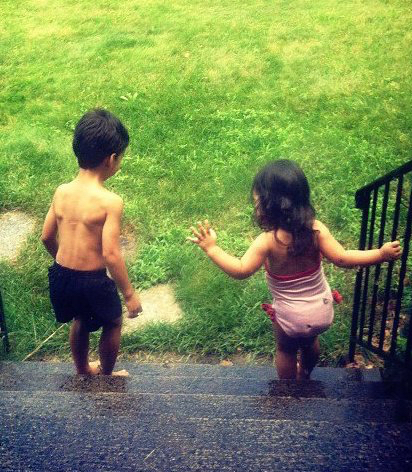
The air rumbles as lighting flashes Across the black gauze of sky, Like God is flicking a switch On and off, off and on.
We kids of the mountains Watch the infinite horizon–amazed, As fat globs of summer rain Plop heavily on our bare skin.
I feel most alive amidst
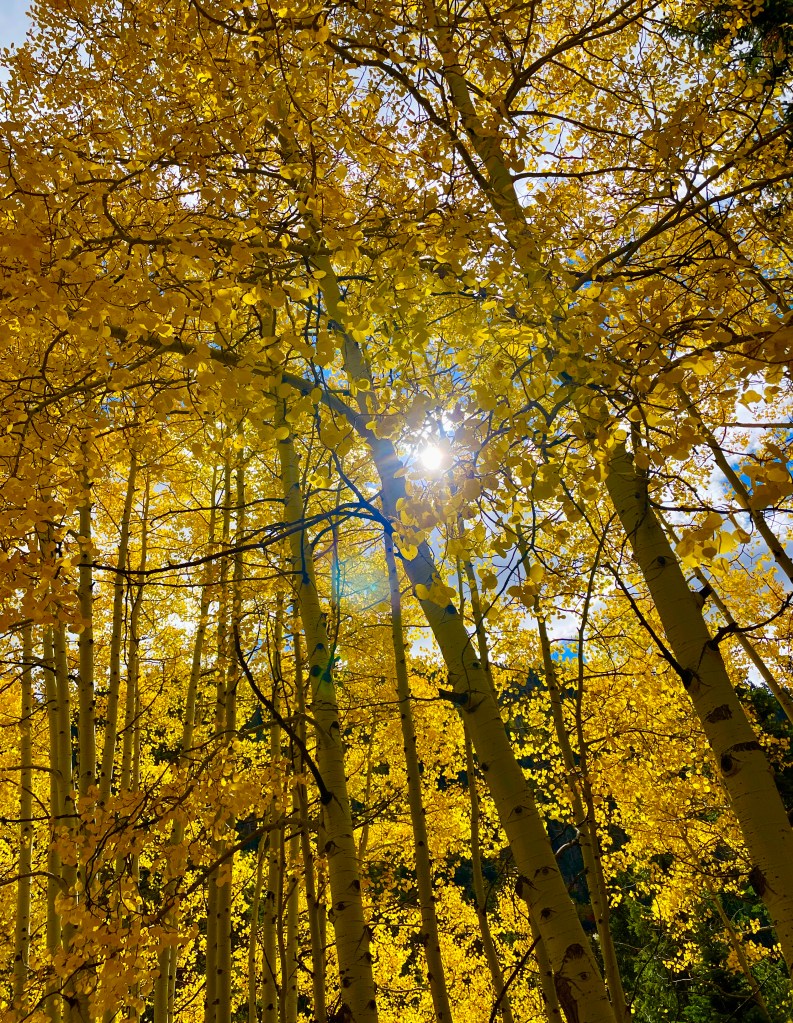
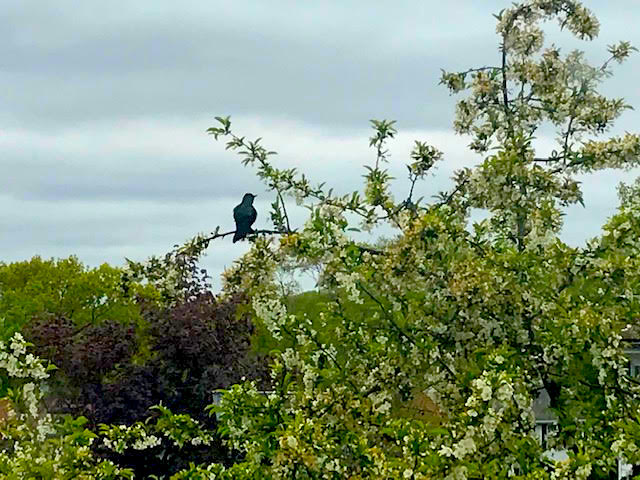
The lilting arpeggio of birdsong– Shoes crunching through scattered leaves
And my eyes lifted to a sky shimmering
With a web of verdant limbs
I feel most alive when
My fingers pluck at nylon strings–
Eyes closed, head tossed back,
Mouth bursting at the seams with
Thought-felt phrases knitted from the soul.
I feel most alive when
The melody of pure laughter escapes
From the pillowy lips of beloved kiddos–
Their tiny, yet powerful bodies hurling
Through the air into my waiting arms.
I feel most alive when
Palms brush across bare skin,
Breaths catch in stuttering chests,
Our fingers, our hearts, our minds
Intertwining as You and I become We.


 Renée Can(ada) Writes